
Controls by weight and by hour
London's rules for heavy vehicles
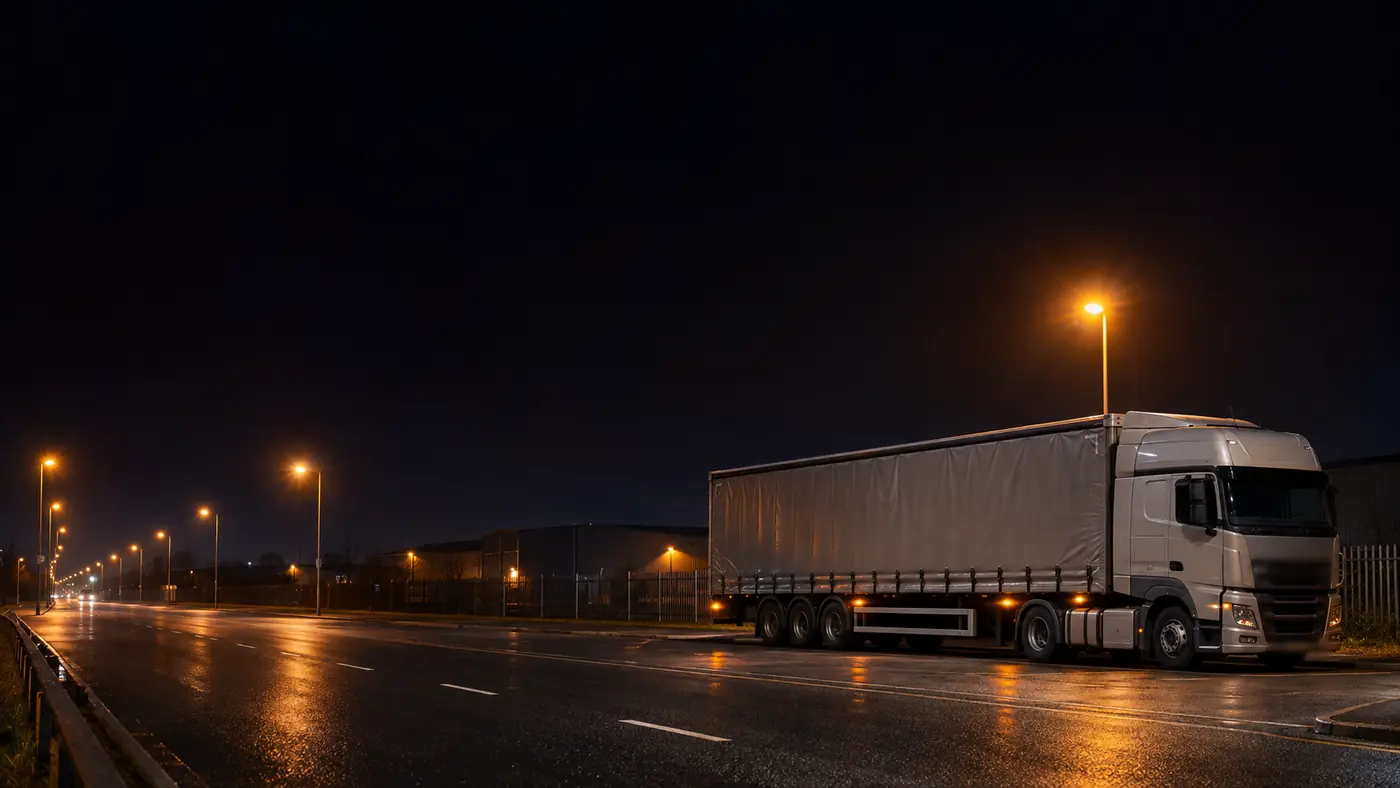
Dagenham is inside Greater London, so three schemes govern a heavy vehicle from the moment it leaves the borough. Between them they decide when a load can be delivered as much as where, and they are the first thing we look at after the weight.
Monday to Friday
Vehicles over 18 t are controlled on restricted roads from 21:00 to 07:00, from 13:00 on Saturday and all of Sunday.
The London Lorry Control Scheme
The scheme controls heavy goods vehicles over 18 tonnes maximum gross weight on restricted roads at night and at weekends, to keep noise out of residential streets. London Councils runs it on behalf of the boroughs, the City and the Transport for London road network. The controlled hours are Monday to Friday from 9 pm to 7 am, including Friday night into Saturday morning, and from 1 pm on Saturday until 7 am on Monday. London Councils states that normal restrictions apply during public and bank holidays.
Inside those hours a heavy vehicle stays on the Excluded Route Network, the roads that remain open at every hour, for as long as it can. Using a restricted road needs a permission for that vehicle, applied for through the scheme's haulier portal; a journey that can be made entirely on the network, or a vehicle that is not over the weight, needs none. The scheme is enforced with penalty charge notices and cameras.
controlled hours on restricted roads, over 18 tno Lorry Control restriction
Direct Vision and the HGV Safety Permit
A goods vehicle over 12 tonnes gross needs a safety permit to drive in most of Greater London, at any hour of the day. Since 28 October 2024 the permit has required a three-star rating under the Direct Vision Standard, which measures how much the driver can see directly from the cab, or the Progressive Safe System: the mirrors, cameras, sensors and audible warnings that make up for what the cab cannot show.
The Low Emission Zone
Lorries and other heavy vehicles over 3.5 tonnes are covered by the Low Emission Zone across Greater London and are expected to meet the Euro VI standard for nitrogen oxides and particles. Vans come under the London-wide ultra low emission zone instead. Both this zone and the safety permit are run by Transport for London, which publishes the current rules at tfl.gov.uk.
Which rules reach which vehicle
| Vehicle | Low Emission Zone | Safety permit | Lorry Control |
|---|---|---|---|
| 7.5-tonne rigid | yes | no | no |
| Rigid over 12 t, up to 18 t | yes | yes | no |
| 26-tonne rigid | yes | yes | yes |
| 44-tonne articulated | yes | yes | yes |
So the hour of a delivery is part of the plan. An articulated delivery to a store on a restricted road at half past five on a weekday falls inside the controlled hours: it keeps to the Excluded Route Network to the nearest point, travels with a permission, or is booked for after seven. The same goods on a 7.5-tonne rigid can go at that hour, which is one reason the vehicle is matched to the delivery address and not only to the weight.
None of these schemes is a reason to promise a time we cannot keep. When we reply to an enquiry we say which of them shapes the job and what that means for the day.