
Road haulage · Dagenham, east London
Strap by strap a loose load made immovable
Pallets standing on a bay at first light are only goods. Strap by strap they become a load that cannot move, and that is the work HAKEM TRANSPORT plans around: full loads, part loads, pallets and multi-drop rounds out of Dagenham along the A13.
The finished load placed, blocked, on friction, strapped
The load: waiting
On the bay, at first light
Before anything moves, the goods are only a list: how many pallets, how big, how heavy, and which can bear weight on top. We do not plan a vehicle around a guess. Weight decides the class of vehicle and where each pallet stands on the deck; length and access decide whether an artic with a 13.6 m trailer can reach the bay at all, or whether the job wants a rigid.
The list is read twice, once for the bay where the load starts and once for the place it comes off, because a forklift at one end and a pavement at the other are two different deliveries.
The load: placed
Placed: heavy, low and forward
Heavier goods go low and towards the front, and the weight is spread along the deck instead of heaped in one place, so no axle carries more than its share and the trailer handles as it should. Stretch-wrap holds a pallet together; it does not hold the pallet to the trailer.
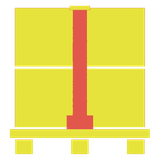
Once on the deck the goods behave as one mass that wants to keep moving when the vehicle does not. The DVSA code of practice sets the basis we work to: the securing system must be able to hold the entire weight of the load forward, half of it to each side and half to the rear. In the drawing above they show as red arrows for as long as the load is loose.
The load: blocked
Against the headboard
No gap left to gather speed in.
The first restraint forward is the front wall of the body, the headboard. Goods loaded hard against it cannot slide forward and then strike it; goods with a gap in front of them can, and a load that has travelled even a short way arrives with far more force than one that was already resting against the wall. Gaps between pallets are closed, or filled with blocking and dunnage, for the same reason.
A headboard holds only what it was built to hold, and that figure comes from the body's documents, not from how solid it looks.
The load: on friction
Friction, and the figure we assume
Friction between load and deck does real work, though less than most expect. The code of practice says to use a certified coefficient for a high-friction surface and otherwise 0.2. At 0.2, friction holds back a fifth of the weight in any direction, and the rest is left to blocking and lashing.
An anti-slip mat under each pallet raises the figure, and only the value on the maker's certificate is counted.
The load: lashed
Lashed, and what each strap holds
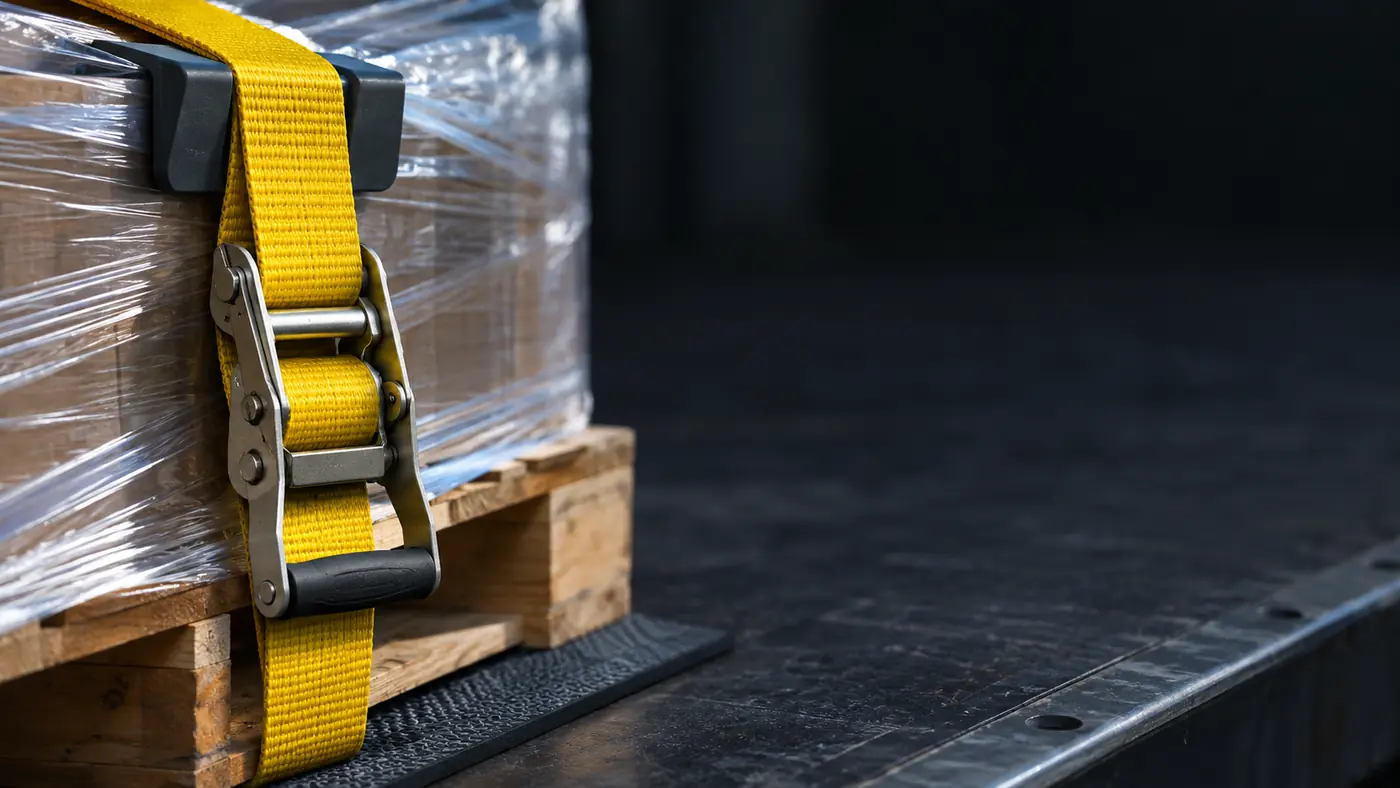
A ratchet strap over the top of a load does not hold it by pulling. It presses the load harder onto the deck, and the extra friction is what holds it. For this top-over lashing the figure that matters on the label is the standard tension force, the STF, in daN, and not the larger lashing capacity, the LC, which is what a strap may carry when it ties the load directly to a lashing point.
The load: covered, not held
The curtain is not the restraint
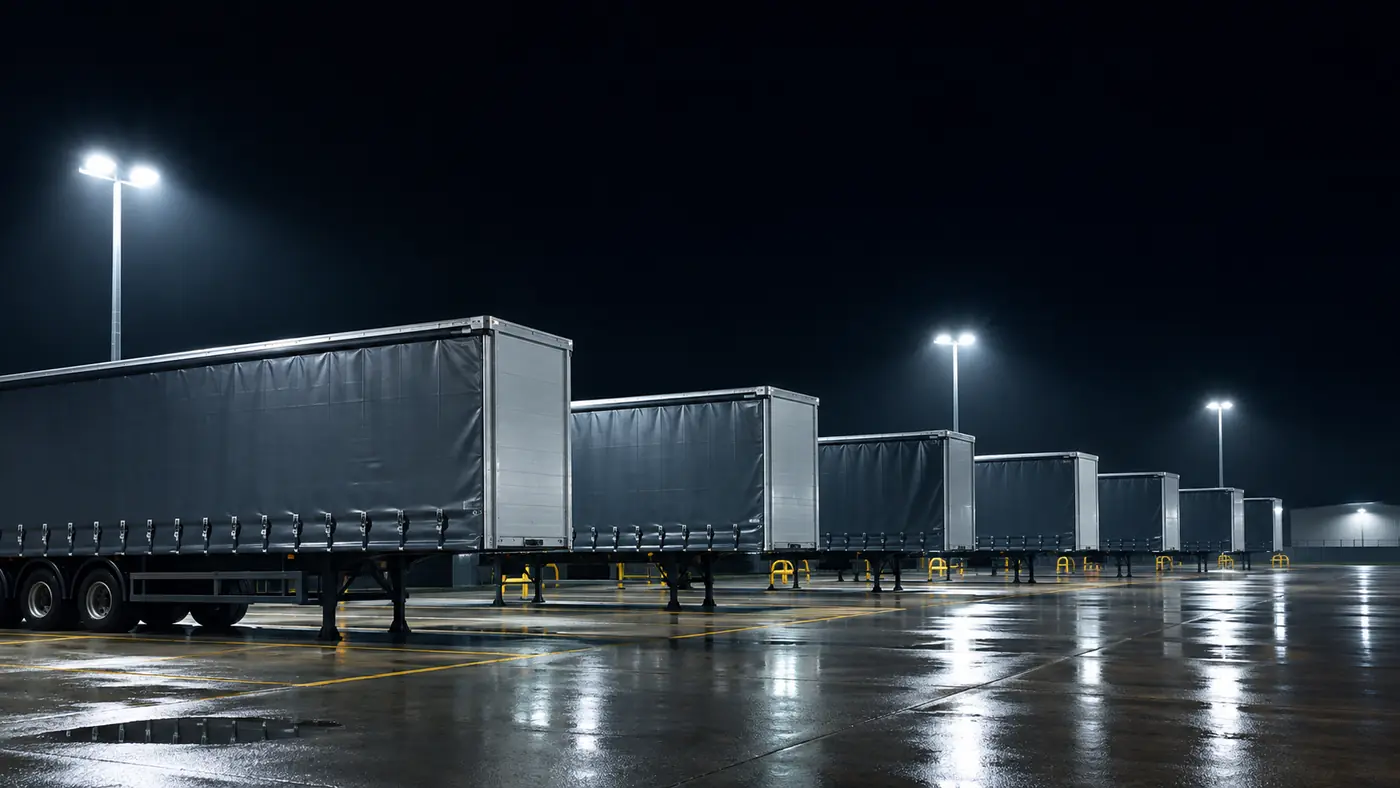
A curtainsider's sides keep the weather out. On a standard body, anything fixed to the frame, such as the buckle straps along the bottom rail or an internal net, secures 400 kg at most; a heavier load is held inside the curtain by its own blocking and lashing.
Standard curtainsider
The curtain is weather protection. Frame-attached straps and nets count for 400 kg at most.
XL-rated body
Built to BS EN 12642, marked XL and documented, so its sides take part of the force as the certificate states. XL curtains on a standard body do not make it one.
The load: closed
Closed and checked
Only when the load is held does the curtain go across and the buckles get done up along the rail. Then the driver walks round before pulling out, and anything wrong goes on the defect report and is put right first. The height notice in the cab is set for the height the vehicle travels at, and a few miles out the straps are looked at again, because a load settles once it has felt the road.

The load: opened
Opened at the other end
At the delivery address the vehicle books in at the time it was given. The curtain comes back, the straps come off one at a time and are checked as they are rolled, and the goods come off by forklift or tail-lift. The signature for them is the proof of delivery.
On a multi-drop round only part of the load leaves at each stop, so what remains is looked at and strapped again before the next one: a load that was immovable at the first bay is not immovable with a gap in the middle of it.
Your own bay: a shipper account
Keep the places you collect from and deliver to, with their bay hours, forklift or tail-lift and the limits on the way in. Raise enquiries from them, follow each one on the desk's timeline from Received to Delivered, and keep the calculations you work out above.
- Pointswhere loads start and end, with their access notes
- Loadsyour enquiries and where each one stands
- Calculationsrestraint forces, ready to attach
Where is it now?
Every load we are asked about gets a reference the moment it is stored. With it and the collection postcode, consignment tracking shows each step the desk has set, from Received to the signature at the other end, and the people waiting for the goods can follow it as well.
What we carry
Full and part loads, pallets one or many, multi-drop rounds across east London and Essex, tail-lift deliveries, building materials to site, booked deliveries into distribution centres, trunk runs on the A13 and M25, and back-loads.
Every enquiry is read and answered by email with how we would move the load.